
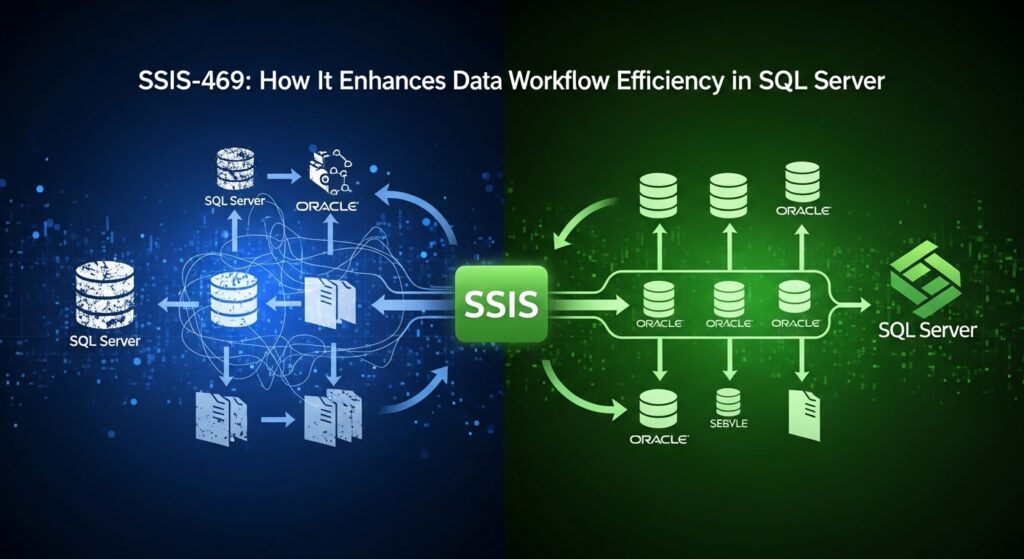
SSIS-469: How It Enhances Data Workflow Efficiency in SQL Server
In the ever-evolving world of data management, organizations are constantly searching for tools that streamline processes and enhance productivity. Enter SSIS-469, a game-changer in SQL Server integration services. This powerful solution not only optimizes data workflows but also empowers businesses to harness their data more effectively than ever before.
Imagine transforming complex data tasks into seamless operations. With SSIS-469 at your disposal, this vision becomes a reality. As we dive deeper into its functionalities and benefits, you’ll discover why this tool is essential for any organization looking to maximize efficiency in their data handling practices. Let’s explore how SSIS-469 can revolutionize your approach to SQL Server integrations and elevate your overall performance!
Understanding the Need for Efficient Data Workflow in SQL Server
Data is the lifeblood of any organization. In SQL Server environments, managing this data efficiently is crucial for maintaining a competitive edge.
Inefficient workflows can lead to delays in processing and analysis. These bottlenecks hinder decision-making abilities and ultimately affect business outcomes.
With an increasing volume of data being generated daily, traditional methods often fall short. Organizations need streamlined processes that enhance speed without sacrificing quality.
Additionally, efficient data workflows enable better resource allocation. When tasks are automated or simplified, teams can focus on strategic initiatives instead of mundane operations.
Investing in effective solutions like SSIS-469 allows businesses to adapt quickly to changing demands while ensuring reliable data handling throughout their systems. It’s not just about getting by; it’s about thriving in a fast-paced digital landscape.
Features and Benefits of SSIS-469
SSIS-469 streamlines data integration processes, making it easier to manage complex workflows. Its intuitive design allows users to create and modify packages with minimal effort.
One standout feature is the enhanced error handling capabilities. When issues arise, SSIS-469 identifies them quickly, enabling swift resolutions without disrupting the entire workflow. This proactive approach minimizes downtime.
Additionally, the tool supports a variety of data sources and destinations. Whether you’re working with databases or cloud services, integrating different systems becomes seamless.
Another benefit is its scalability. As your data needs grow, SSIS-469 adapts easily to accommodate increased volumes without sacrificing performance.
Collaboration within teams also improves significantly thanks to robust version control features. Teams can work simultaneously on projects while ensuring that everyone stays updated on changes made by others.
These attributes make SSIS-469 an essential component for optimizing data workflows in SQL Server environments.
Real-Life Examples of How SSIS-469 Improved Data Workflow Efficiency
A mid-sized retail company faced challenges in processing vast amounts of sales data. With SSIS-469, they streamlined their ETL processes. This reduced the time taken to generate reports from hours to minutes, allowing for quicker decision-making.
Another organization in the healthcare sector struggled with integrating disparate systems. By implementing SSIS-469, they created a unified workflow for patient records and billing information. The result? Enhanced accuracy and faster access to critical data.
An e-commerce platform utilized SSIS-469 to automate inventory management. They achieved real-time updates on stock levels across multiple channels, minimizing overselling incidents.
These examples illustrate how diverse industries leverage SSIS-to enhance efficiency in their data workflows, ultimately driving better business outcomes through improved speed and reliability.
Implementation and Integration of SSIS-469 in SQL Server Environments
Implementing SSIS-469 in SQL Server environments is straightforward. Start by ensuring your SQL Server version meets the necessary prerequisites for seamless integration.
Begin with installing the SSIS-469 package. This typically involves downloading it from a trusted source and following installation instructions carefully.
Once installed, configure your data sources. Connect to various databases easily, allowing for efficient data extraction and transformation processes.
Utilize visual tools within SSIS-for building workflows. The drag-and-drop interface simplifies designing complex data flows without extensive coding knowledge.
Testing is crucial after implementation. Validate all connections and transformations to ensure everything functions as intended before going live.
Monitor performance regularly post-integration. Address any issues promptly to maintain optimal efficiency in your data workflows across systems.
Common Challenges and How to Overcome Them
Implementing SSIS-469 can present several challenges. One common issue is the steep learning curve for new users. Teams may struggle to adapt, leading to inefficiencies.
To tackle this, investing in training sessions helps bridge knowledge gaps. Hands-on workshops allow staff to gain practical experience and confidence in using the tool effectively.
Another challenge lies in integration with existing systems. Compatibility issues can disrupt workflows or lead to data silos.
Using middleware solutions or APIs can facilitate smoother integrations. This approach ensures that all components communicate seamlessly, enhancing overall performance.
Monitoring and troubleshooting SSIS-processes require diligence. Users might face difficulties identifying bottlenecks or failures within their workflows.
Establishing a robust logging system aids in pinpointing issues quickly. Regular reviews of logs enable proactive problem-solving before they escalate into larger concerns.
Future Developments and Updates of SSIS-469
The landscape of data integration is ever-evolving, and SSIS-469 is poised to adapt to these changes. Future updates promise enhancements in automation capabilities, making it easier for users to streamline complex workflows without extensive manual intervention.
Integration with emerging technologies like artificial intelligence may also be on the horizon. AI could provide predictive analytics, enabling smarter decision-making within data processes.
Moreover, user feedback plays a crucial role in shaping upcoming features. Continuous improvement based on real-world experiences ensures that SSIS-remains relevant and effective.
Improvements in cloud integration are expected as well, facilitating seamless connectivity between local databases and cloud services. This will allow organizations to leverage the best of both environments efficiently.
Enhanced security protocols might be introduced to safeguard sensitive data during transfer and processing, addressing growing concerns around data privacy and compliance regulations.
Conclusion
SSIS-469 is a powerful tool that significantly enhances data workflow efficiency in SQL Server environments. By addressing the need for streamlined processes, it offers features and benefits that can transform how organizations handle their data tasks. Real-life examples demonstrate its potential to improve productivity, making it an essential asset for many businesses.
Implementing SSIS-may come with challenges, but understanding these hurdles allows teams to navigate them effectively. As updates and developments continue to emerge, staying informed about SSIS-469 will ensure you maximize its capabilities and maintain an edge over competitors.
Embracing this technology is more than just keeping up—it’s about optimizing your operations for better results in a rapidly evolving digital landscape. The future looks promising as organizations recognize the significant advantages of integrating SSIS-into their workflows. With ongoing improvements on the horizon, there’s no better time to explore what can do for your SQL Server environment.