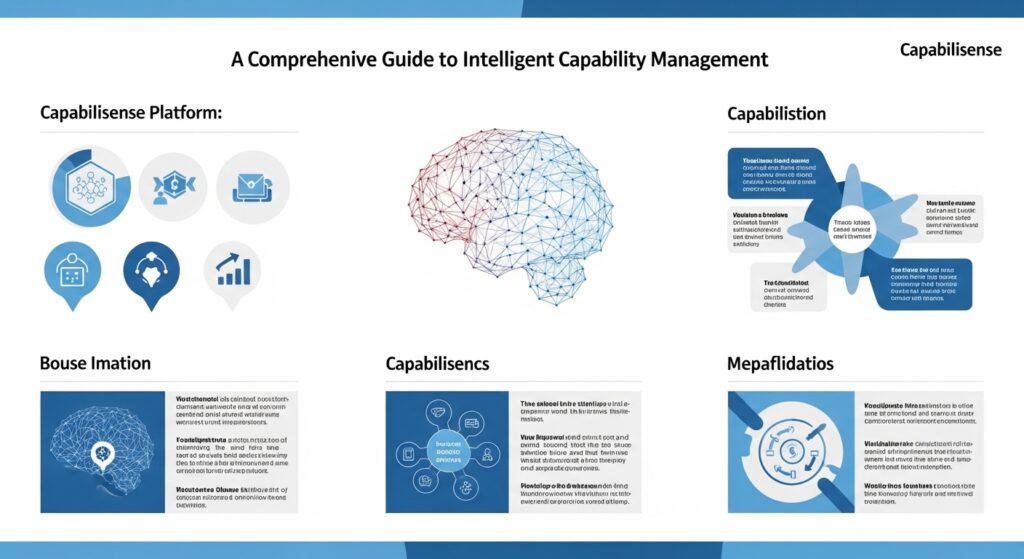
Capabilisense Platform: A Comprehensive Guide to Intelligent Capability Management
In today’s rapidly evolving digital landscape, organizations must constantly adapt to new technologies, operational demands, and competitive pressures. Businesses that fail to manage their internal capabilities effectively often struggle to scale, innovate, or maintain operational efficiency. This is where the Capabilisense platform emerges as a transformative solution.
The Capabilisense platform is designed to help organizations understand, map, and optimize their capabilities across departments, processes, and technology systems. Instead of operating in isolated silos, businesses can use this platform to create a unified view of their operational strengths, resources, and strategic potential.
Modern enterprises increasingly rely on intelligent platforms to analyze data, support decision-making, and streamline operations. The Capabilisense platform provides a centralized framework that connects business capabilities with technology, people, and processes. By doing so, organizations gain deeper insights into how they function and where improvements can be made.
Companies across industries—from finance and healthcare to manufacturing and technology—are adopting capability management platforms to enhance productivity and strategic planning. Through data-driven insights and integrated analysis tools, the Capabilisense platform helps leaders make informed decisions that drive growth and innovation.
Ultimately, the Capabilisense platform serves as a bridge between strategy and execution, ensuring that organizations align their resources with long-term objectives.
Understanding the Core Concept of the Capabilisense Platform
The Capabilisense platform is fundamentally built around the concept of capability management. Capability management focuses on identifying what an organization can do, how effectively it performs those functions, and how those functions support strategic goals.
Unlike traditional management tools that focus only on tasks or workflows, the Capabilisense platform emphasizes a broader perspective. It looks at the combination of people, processes, technologies, and data that together create business capabilities.
Organizations often face challenges such as:
-
Lack of visibility into internal capabilities
-
Inefficient resource allocation
-
Difficulty aligning business strategy with operations
-
Fragmented systems and processes
The Capabilisense platform addresses these issues by providing a structured environment where capabilities can be mapped, analyzed, and optimized.
The following table illustrates how capability management compares with traditional operational management.
| Aspect | Traditional Management Tools | Capabilisense Platform Approach |
|---|---|---|
| Focus | Tasks and workflows | Organizational capabilities |
| Data Integration | Limited | Integrated data ecosystem |
| Strategic Alignment | Often disconnected | Directly linked to strategy |
| Visibility | Department-specific | Organization-wide |
| Decision Support | Basic reporting | Advanced capability analytics |
By shifting focus from isolated activities to overall capabilities, the Capabilisense platform enables organizations to see the bigger picture and make smarter decisions.
Key Features of the Capabilisense Platform
The Capabilisense platform offers a wide range of features designed to enhance visibility, collaboration, and strategic planning within organizations.
One of the most valuable aspects of the Capabilisense platform is its ability to provide a centralized capability map. This map visually represents the various functions and competencies within an organization, allowing leaders to quickly understand how different units contribute to overall performance.
Another important feature is data integration. The Capabilisense platform connects with multiple enterprise systems, including customer relationship management software, enterprise resource planning tools, and analytics platforms. This integration ensures that decision-makers have access to accurate and up-to-date information.
The platform also includes analytics and performance monitoring tools. These tools allow organizations to measure capability maturity, identify gaps, and track improvement over time.
The table below highlights some of the main features of the Capabilisense platform and their practical benefits.
| Feature | Description | Business Benefit |
|---|---|---|
| Capability Mapping | Visual representation of business capabilities | Improved organizational transparency |
| Data Integration | Connects multiple enterprise systems | Accurate and unified data insights |
| Performance Analytics | Measures capability effectiveness | Data-driven decision making |
| Collaboration Tools | Supports cross-team communication | Improved productivity |
| Strategic Alignment | Links capabilities with business goals | Better long-term planning |
These features collectively make the Capabilisense platform an essential tool for organizations seeking to modernize their operations.
How the Capabilisense Platform Supports Digital Transformation
Digital transformation is no longer optional for businesses aiming to remain competitive. However, transformation initiatives often fail due to poor planning, lack of alignment, or insufficient understanding of organizational capabilities.
The Capabilisense platform plays a critical role in supporting digital transformation by providing a structured approach to capability analysis and improvement.
When companies begin a transformation journey, they must first assess their existing capabilities. The Capabilisense platform enables organizations to conduct comprehensive capability assessments, identifying strengths and weaknesses across departments.
Once this assessment is complete, leaders can use insights from the Capabilisense platform to prioritize investments in technology, training, and process improvement.
A simplified example of transformation planning using the platform is shown below.
| Transformation Stage | Role of the Platform | Outcome |
|---|---|---|
| Capability Assessment | Identify existing strengths and gaps | Clear understanding of current state |
| Strategic Planning | Align capabilities with business objectives | Focused transformation roadmap |
| Implementation | Monitor capability improvements | Improved operational efficiency |
| Continuous Optimization | Analyze performance data | Sustainable innovation |
Through this systematic approach, the Capabilisense platform ensures that digital transformation initiatives are both effective and sustainable.
Benefits of Using the Capabilisense Platform in Organizations
The adoption of the Capabilisense platform can significantly improve organizational performance in multiple ways.
One of the most notable benefits is enhanced visibility. Leaders gain a clear understanding of how different capabilities contribute to overall business success. This transparency helps eliminate inefficiencies and identify opportunities for improvement.
Another major advantage is improved strategic alignment. The Capabilisense platform connects operational capabilities with high-level business objectives. As a result, organizations can ensure that their resources are used in ways that support long-term goals.
Operational efficiency also improves when organizations implement the Capabiisense platform. By analyzing data and identifying capability gaps, companies can optimize processes, reduce redundancy, and improve productivity.
The following table summarizes key benefits and their organizational impact.
| Benefit | Organizational Impact |
|---|---|
| Greater visibility | Better understanding of internal operations |
| Strategic alignment | Strong connection between operations and business goals |
| Improved efficiency | Reduced operational waste and duplication |
| Enhanced decision making | Data-driven leadership |
| Increased adaptability | Faster response to market changes |
These benefits demonstrate why capability management platforms are becoming essential tools for modern enterprises.
Capabilisense Platform Implementation Strategies
Implementing the Capabilisense platform requires careful planning and collaboration across the organization.
The first step in successful implementation is defining clear objectives. Organizations must determine what they want to achieve, whether it is improved operational efficiency, stronger strategic alignment, or enhanced data visibility.
Once objectives are defined, the next stage involves mapping existing capabilities. The platform provides tools that allow teams to document and analyze current processes, technologies, and competencies.
After capability mapping, organizations can begin integrating data sources into the platform. This step ensures that the platform has access to relevant information needed for analysis and decision-making.
The final stage involves continuous monitoring and optimization. Organizations should regularly review capability data and adjust strategies accordingly.
| Implementation Stage | Key Activities |
|---|---|
| Planning | Define goals and project scope |
| Capability Mapping | Document organizational capabilities |
| Data Integration | Connect enterprise systems |
| Training | Educate teams on platform usage |
| Continuous Optimization | Monitor and improve capabilities |
A structured implementation approach ensures that organizations maximize the value of the Capabilisense platform.
Challenges and Considerations When Using the Capabilisense Platform
While the Capabilisense platform offers significant advantages, organizations may face certain challenges during adoption.
One common challenge is organizational resistance to change. Employees may be hesitant to adopt new systems or alter established workflows. Addressing this issue requires effective communication and training.
Another consideration is data quality. The effectiveness of the platform depends heavily on accurate and reliable data. Organizations must ensure that their data sources are properly managed and maintained.
Integration complexity may also present difficulties, particularly for companies with multiple legacy systems. Careful planning and technical expertise are required to ensure smooth integration.
| Challenge | Potential Solution |
|---|---|
| Resistance to change | Provide training and communication |
| Data inconsistencies | Establish data governance policies |
| Integration issues | Use standardized integration frameworks |
| Lack of expertise | Invest in professional training |
By proactively addressing these challenges, organizations can successfully leverage the Capabilisense platform.
Future Trends and the Evolution of the Capabilisense Platform
As technology continues to evolve, capability management platforms are expected to become even more sophisticated. The platform is likely to incorporate advanced technologies such as artificial intelligence, predictive analytics, and automation.
Artificial intelligence could enable the platform to automatically identify capability gaps and recommend solutions. Predictive analytics may allow organizations to anticipate future challenges and prepare accordingly.
Automation will also play an increasingly important role. Routine capability assessments and reporting processes can be automated, freeing employees to focus on strategic initiatives.
The table below outlines potential future developments.
| Future Technology | Potential Impact |
|---|---|
| Artificial Intelligence | Automated capability analysis |
| Predictive Analytics | Forecasting organizational needs |
| Automation | Streamlined reporting and monitoring |
| Advanced Data Visualization | Enhanced decision-making insights |
These developments will further strengthen the role of the platform as a strategic management tool.
Conclusion
The Capabilisense platform represents a powerful approach to modern capability management. By providing organizations with a comprehensive view of their capabilities, it enables leaders to align resources, improve efficiency, and support long-term strategic goals.
Through capability mapping, data integration, and advanced analytics, the platform helps businesses move beyond traditional management practices. Instead of focusing solely on individual tasks or departments, organizations can view their operations as interconnected capabilities that contribute to overall success.
As businesses continue to face rapid technological change and increasing competition, platforms that provide deeper insights and strategic alignment will become essential. The platform offers exactly that—an intelligent system that transforms data into actionable insights.
Organizations that successfully implement the platform can expect improved transparency, stronger strategic alignment, and greater operational efficiency. In a world where adaptability and innovation determine success, capability management platforms like this are shaping the future of enterprise strategy.